
News Summary
Rural communities are facing an unprecedented surge in fly tipping and rural crime, with statistics showing a 76% increase in Mid Sussex alone. Farmers are calling for immediate government action to address the escalating situation, which poses serious risks to property, public safety, and the environment. The emotional toll on farming families, combined with hazardous waste threatening livestock and wildlife, highlights the urgent need for a cohesive rural crime strategy. Local councils are also struggling with waste management issues, further exacerbating the problem of fly tipping in these vulnerable areas.
The Alarming Rise of Fly Tipping and Rural Crime: A Call for Action
As rural communities grapple with unsettling changes, the urgency for a comprehensive rural crime strategy has never been more pressing. Farmers across the nation, including prominent voices in the agricultural sector, are demanding immediate government action to combat the rampant increase in fly tipping incidents. Recent statistics reveal a staggering 76% increase in fly tipping within Mid Sussex alone, highlighting the growing threat to both property and public safety.
Baffling Statistics Reveal Escalating Rural Crime Rates
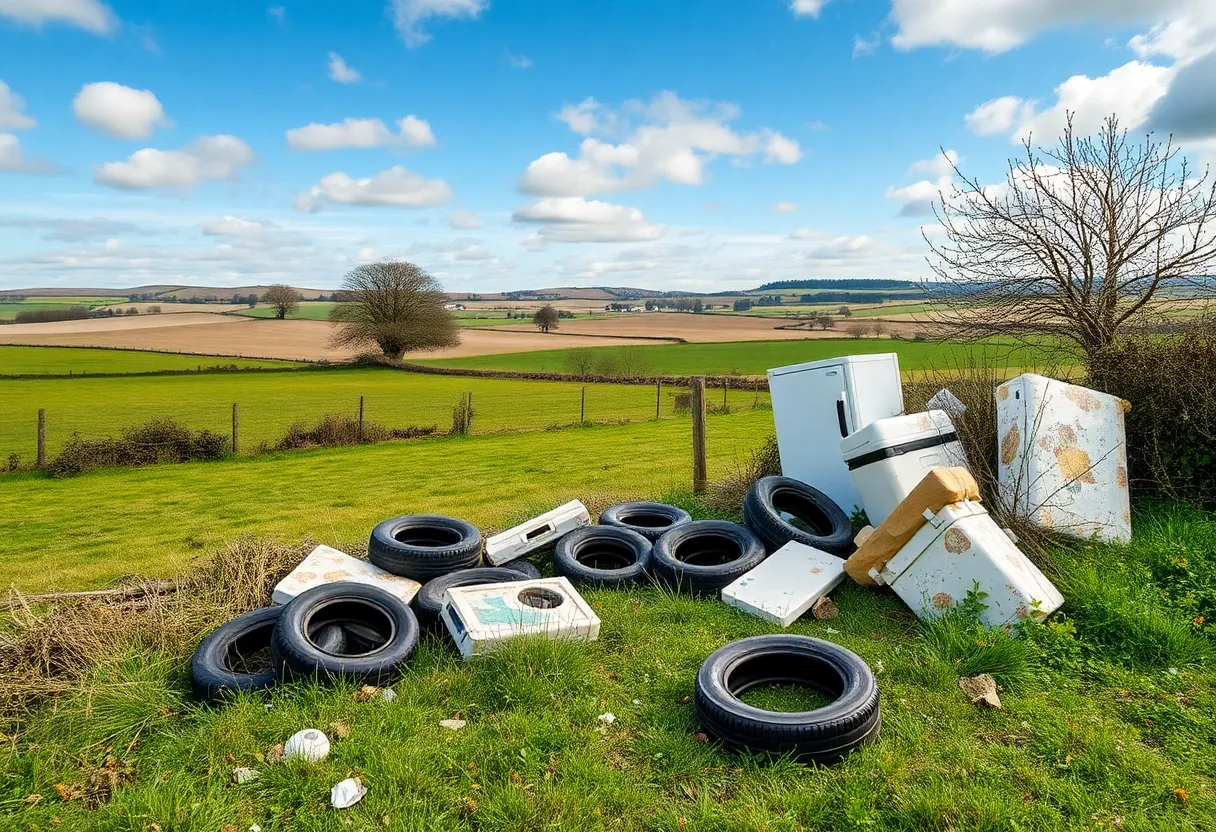
In Crawley, fly tipping has surged by an alarming 32%, according to comprehensive data compiled by the Department for Environment, Food & Rural Affairs (Defra). This upward trajectory is corroborated by a survey from the Country Land and Business Association (CLA), which found that 90% of farmers have been confronted with fly-tipped items ranging from tyres and fridges to sofas on their properties. The emotional toll weighs heavily on farmers, with hazardous waste materials—including paints and poisons—being unceremoniously dumped on farmland, creating perilous conditions for both livestock and local wildlife.
The ecological repercussions are profound, with innocent creatures sometimes becoming ensnared in improperly discarded materials. Such risks accentuate the need for systematic changes to waste disposal practices—potentially easing the process for disposing of large quantities to deter illegal dumping.
Rural Communities Vulnerable to Organized Criminal Activity
The current landscape of rural crime presents a stark reality for many farming communities. The CLA’s Regional Director has expressed deep concern, noting that organized crime has increasingly targeted these areas, often escalating to violent confrontations. The call for the government to finalize and implement their much-promised rural crime strategy is an echoing demand aimed at protecting farmers’ livelihoods and enhancing safety within these close-knit communities.
Furthermore, fly tipping poses risks beyond property damage, as hazardous household wastes—including chemical and asbestos materials—threaten entire ecosystems and food safety. The once idyllic farming landscape is being tarnished by a 32% increase in rural crime since 2011, outpacing the rise of crime in urban regions.
Shocking Incidents of Animal Waste and Public Health Concerns
Recent revelations have further clouded the rural landscape, with reports indicating that remains of slaughtered pigs have surfaced in East Sussex. These alarming discoveries raise pressing concerns regarding the potential for unregulated meat products to infiltrate the food chain. Wealden District Council acknowledges the seriousness of five separate incidents involving pig remains being fly-tipped in locations such as Crowborough and Eridge. This situation poses a significant threat not only to local livestock but to the broader human population as well.
Waste Collection Services Under Threat: A National Concern
Amid the escalating fly tipping problem, local councils are facing their own set of challenges regarding waste collection services. A recent Freedom of Information request uncovered that 42 councils across the UK are considering reducing waste collection frequencies, impacting around five million residents. With plans to cut services to once a month in cities like Bristol, community backlash is palpable; public opinion is strongly against such measures. Indeed, a poll indicated that the majority of Britons harbor negative sentiments toward reductions in waste collection.
In light of these developments, it appears that rural crime and inadequate waste management practices threaten the very essence of community and safety. As councils grapple with financial constraints, the potential cuts to waste collection may only exacerbate the issue of fly tipping, leading to a cycle of accumulating waste and danger.
Across the board, from farmers to local councils, there is a clear and urgent demand for cohesive strategies to address fly tipping and ensure community safety. As rural areas face unprecedented challenges, the time for effective action is now.