

News Summary
The USS Hamner (DD-718) served valiantly during critical conflicts like the Korean and Vietnam Wars. However, its crew faced significant health risks due to asbestos exposure, leading to severe diseases such as mesothelioma. This article explores the ship’s storied history, the dangers posed by asbestos, and the ongoing efforts to provide support and compensation for affected veterans.
USS Hamner: A Legacy of Valor and Hidden Dangers
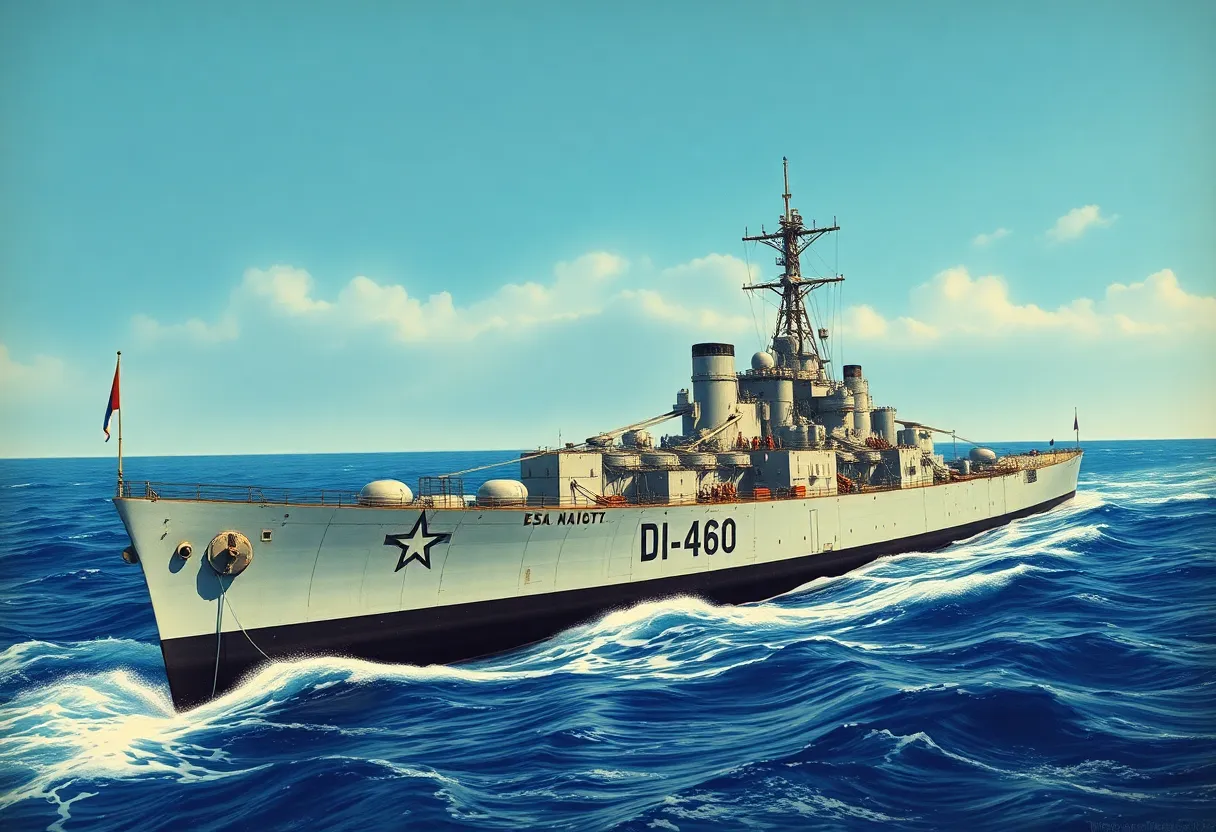
The USS Hamner (DD-718), a notable Gearing-class destroyer, made quite a name for itself in the service of the United States Navy, especially during key conflicts like the Korean War and the Vietnam War. However, the valor exhibited aboard this ship came with a hidden peril that many of its crew members faced: exposure to asbestos. This latent threat has now emerged as a serious health concern, leading to diseases such as mesothelioma and asbestos-related lung cancer.
Constructed to Perform but Laced with Risks
The USS Hamner was launched on November 24, 1945, and commissioned shortly thereafter on July 12, 1946. Despite the ship’s revolutionary design improvements—achieving a length of 390 feet and capable of speeds up to 37 knots—its construction came with a dark side. Built at the Federal Shipbuilding and Drydock Company in New Jersey, the ship contained significant amounts of asbestos, a material well-known for its heat-resistant properties but equally infamous for its health risks.
The ship was designed for versatility, equipped with advanced radar and sonar systems while undergoing numerous modifications for specialized combat roles. The equipment onboard, including four Babcock & Wilcox boilers and General Electric steam turbines, became notorious for being associated with asbestos exposure, putting countless service members at risk.
Service Record and Asbestos Exposure
Throughout her active service, the USS Hamner was involved in various critical operations. During the Korean War, the vessel provided crucial artillery support against enemy positions. The destroyer was part of the famed Inchon landing and patrolled the waters around Korea for years. Later, during Vietnam operations, she played a vital role in numerous tactical missions and even provided emergency assistance during the infamous Oriskany fire.
However, while sailors were focused on their duties during these historic military engagements, many were unknowingly inhaling deadly asbestos fibers. These tiny particles could become airborne, especially when maintaining or repairing machinery containing asbestos. Engineering and maintenance crews faced the highest risk, working in poorly ventilated spaces surrounded by hazardous materials that could lead to life-altering conditions.
The Silent Threat of Asbestos Diseases
The real tragedy lies in the lag between exposure and symptom manifestation. Many of those who served aboard the USS Hamner may not show signs of asbestos-related diseases until decades later. This includes conditions like asbestosis, which causes lung scarring, and mesothelioma, a rare cancer that develops in the lining of the lungs. Once symptoms arise, urgent medical attention is needed, often requiring extensive and costly treatments.
Veterans Seeking Justice
Veterans who served on the USS Hamner, or in naval shipyards during her construction and servicing, may be eligible for compensation due to their asbestos exposure. The Department of Veterans Affairs (VA) offers various benefits for those diagnosed with asbestos-related health issues, including comprehensive medical coverage and disability compensations. Mesothelioma alone can qualify for a 100% disability rating.
Moreover, affected veterans may also explore legal avenues for compensation against manufacturers and suppliers of asbestos products. Numerous companies with historical ties to asbestos exposure have set up court-mandated trust funds to compensate victims. Consulting with experienced asbestos attorneys can provide invaluable guidance and support for veterans navigating these complex legal landscapes.
Monitoring Health: A Vital Step
For those who may have been exposed, informing healthcare providers about previous asbestos exposure is critical. Regular check-ups and monitoring can lead to early diagnosis, which significantly influences treatment outcomes. This knowledge can aid physicians in their efforts to catch and treat diseases stemming from asbestos exposure that might otherwise go unnoticed until it’s too late.
Remembering USS Hamner: Risks and Recognition
The USS Hamner remains a symbol of bravery and commitment among naval personnel. Yet, as its former crew members grapple with the realities of asbestos exposure, it’s crucial to recognize both the honor of serving and the hidden dangers they faced. Those who served aboard must remain vigilant about their health while exploring the benefits and compensations available to survivors of this ongoing crisis.